100S/200S Sounds. Part 1

Part 1: The 1960’s & Early 70’s When Power Meant Survival
There was a point in the late 1960s when amplification stopped being about sound alone and started being about survival.
Crowds were bigger. Bands needed to get louder. Drummers were hitting harder. Stages were bigger, and sound systems were not ready for the volume.
If your amp could not get loud, you disappeared.
That was the pressure Sunn was born into.
Not a search for flavor.
Not a pursuit of novelty.
A response to a very real problem faced by working musicians.
How do you stay heard when everything around you gets louder? The answers became the 100S and the 200S.
The 100S
The guitar amp that refused to collapse
The 100S arrived at a moment when many guitar amps sounded good at moderate volume, then unraveled when pushed.
Low end loosened.
Notes blurred.
Night to night consistency vanished or worse, gear broke down mid performance.
Conrad Sundholm & Sunn took a different path.
Instead of designing for early breakup, the 100S was designed for control under pressure. Big transformers. Conservative power handling. A circuit that stayed composed as volume increased.
Players noticed immediately.
There is a theme that comes up again and again when people tell us about the history of early Sunn amps.
“The sound didn’t fall apart as you pushed ‘em.”
That one idea explains almost everything we see in the designs and engineering.
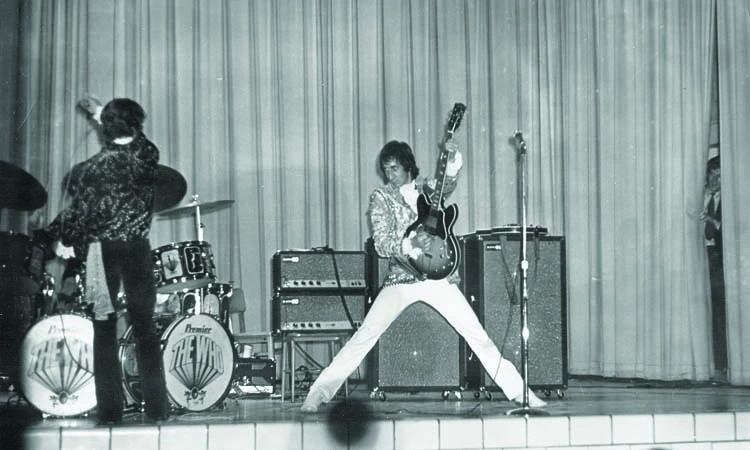
Pete Townshend, The Who with two Sunn 100S amps and 2×15 cabinets.
Source: thewho.net
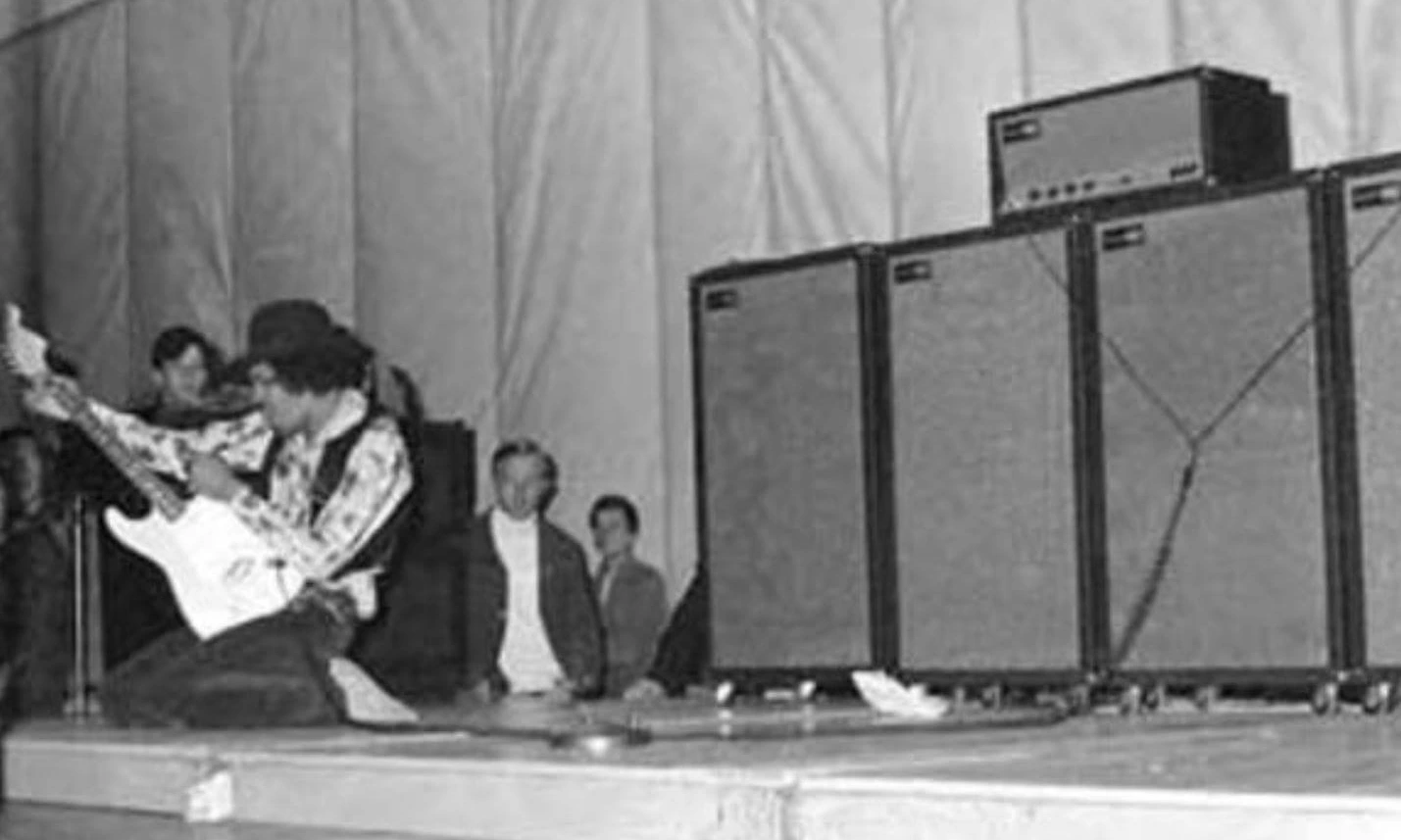
Jimi Hendrix with a Sunn 100S amp behind him, and four Sunn 100-F cabinets. Source: groundguitar.com
In an era with few effects and limited signal processing, the amp itself had to be trustworthy. The 100S delivered:
- Clean headroom that stayed usable on large stages
- A low end that stayed firm instead of sagging
- A response that rewarded touch and dynamics
This was not an amp built to impress at low volume.
It was built to hold the line when things got loud.
The History & Legacy:
The 100S was designed to stay clear when other amps gave up.
The 200S
When bass finally stopped apologizing

In the 60’s bass players faced an even harsher reality.
As guitar rigs grew louder, bass amps struggled to keep up. Low frequencies blurred. Notes disappeared. Bass was felt, but not understood.
The 200S was Sunn’s refusal to accept that tradeoff.
It was designed specifically to give bass players:
* Real low-frequency authority
* Midrange presence that survived loud mixes
* Stability at volumes where other amps folded
This was not about grind or coloration.
It was about confidence.
Bass players could finally occupy their space on stage without compromise.
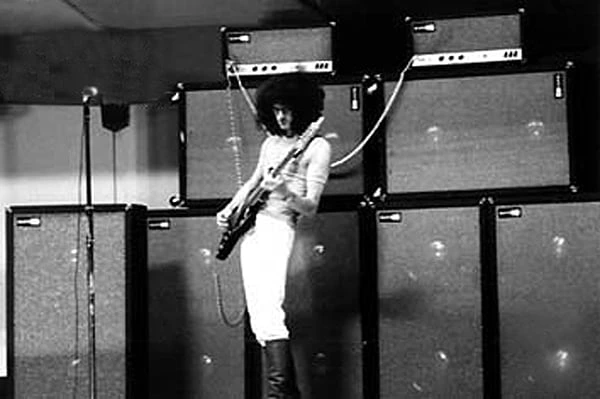
Noel Redding, The Jimi Hendrix Experience with two Sunn 200S amps
And then something unexpected happened.
Guitarists started plugging into it.
Even in its earliest days, players noticed that the 200S stayed together where many guitar amps unraveled. Chords remained articulate. The bottom end stayed disciplined and powerful. The bloom & boom of something special.
An amp built for one job, suddenly revealed it could do another ... like no other.
That discovery would matter much until music got deeper & more complex.
The 200S gave bass players power without blur, and showed guitarists what controlled low end really feels like.
A World Before Pedals
To understand why these amps still matter, context is required.
In the late 1960s:
* Pedals were rare or primitive
* Effects were not central to tone
* The amp was the sound
If your amp failed, nothing else could save you.
The 100S and 200S were built for that reality.
Not to soften mistakes.
Not to smooth edges.
They were designed for pressure, for scale, for moments when everything else starts to give way.
That kind of design doesn’t expire.
It waits. Hiding in plain sight.
Because while the tools around musicians changed, the demands did not.
The stages stayed loud.
The expectations stayed high.
And the amps that survived the first era of pressure were about to be tested all over again.
This is where their story stops being historical.
And starts being current. Their story did not end.
This story continues in Part Two.
That’s where we move from how the 100S and 200S survived loud stages in the 1960s to how they thrive in modern rigs today.
Read more