
CMOS & Chaos: Inside the Sunn Beta Lead and Beta Bass — Part One: The Tech
Some amps say one just one thing. The Beta speaks nearly every language.
Originally introduced in the late ’70s and quickly embraced by the underground, the Sunn Beta Lead and Beta Bass are two of the most misunderstood and misused amplifiers ever made—and that’s part of the magic. They’re loud, unapologetically solid-state, and wired for the weirdos who want their tone sharp, responsive, and just on the edge of breaking. Sunn didn’t build these for jazz cats or tweed nostalgists. These were built for players chasing sounds that tubes alone can’t deliver.
The 2023 reissue stays true to that mission.
But to fully appreciate what makes the Beta series so powerful—and why it was so ahead of its time—we need to rewind to the late 1970s, when guitar amp design was at a crossroads.
The Beta’s Birth: Innovation Over Imitation
By the time the Beta Lead and Beta Bass hit the market, Sunn was already known for massive tube amps like the Model T and the Coliseum series. But music was changing. Punk, post-punk, and early industrial were on the rise. Players were seeking more clarity, more punch, and tones that weren’t just warm—they were wild.
This was the dawn of rack gear, stereo rigs, and active pickups. Solid-state was gaining traction not just as a cheaper alternative to tubes, but as a platform for creative control. Sunn leaned into this shift, not by copying what others were doing, but by building something that could handle extremes—dynamically, tonally, and structurally.
The Beta series was designed with dual channels, active EQ, and CMOS-based clipping—a bold move at the time. These weren’t watered-down tube wannabes. They were purpose-built for guitarists and bassists chasing aggressive, high-fidelity, and experimental sounds.
The lead designer behind the Beta series, Rod Goldhammer, approached amp design like a systems engineer: the preamp was the paintbrush, the power amp was the canvas. His goal? Sonic control up front, clean horsepower in the back.
This philosophy explains the Beta’s unconventional layout: stereo outputs, active tone controls, independent voicing across channels, and a preamp distortion profile that was abrasive yet articulate. It was, quite literally, a different breed.
PART 1: THE TECH UNDER THE CHAOS
Active EQ: A Studio Console in a Guitar Head
If you’ve ever fought with a passive EQ, you know the feeling: sweep the mids, lose the highs. Push the bass, everything muds up. The Beta said screw that. With an active EQ circuit, you get precise control. +/-15dB cut or boost across each band means you’re shaping tone, not just rolling it off.
Want scooped and clangy like early industrial? Done. Need to surgically boost a frequency for a cocked-wah solo tone? Easy. This EQ is more SSL console than vintage amp, and it rewards experimentation. For guitarists and bassists alike, it’s a tone chisel.
Try This: Sound Sculpting Presets
Doom & Sludge Wall: Boost lows (8), cut mids (4~5), push highs (6~7). Great for massive, riff-forward playing.
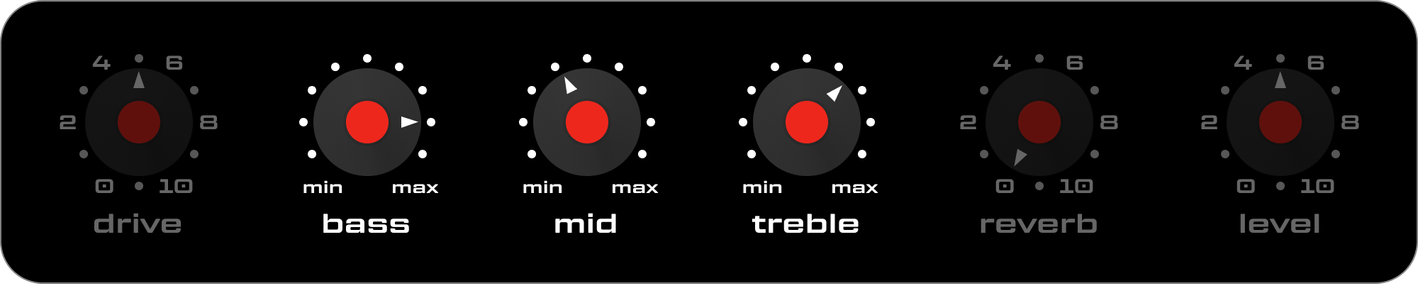
Cocked-Wah Lead (Brian May-ish): Boost mids (9) , cut lows and highs slightly (4). Emphasizes that vocal, forward solo tone.
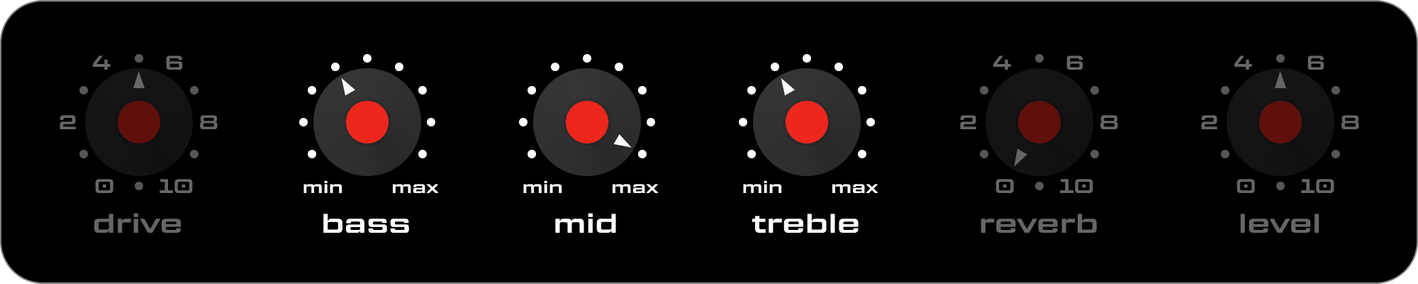
Punchy Punk Rhythm: Cut lows (4), boost mids (6~8), leave highs flat (5). Helps single-note riffs pop through the mix.

Bass Growl: Boost mids (6~7), keep bass flat (5), slightly cut treble (4~5). Gritty and articulate without getting lost.
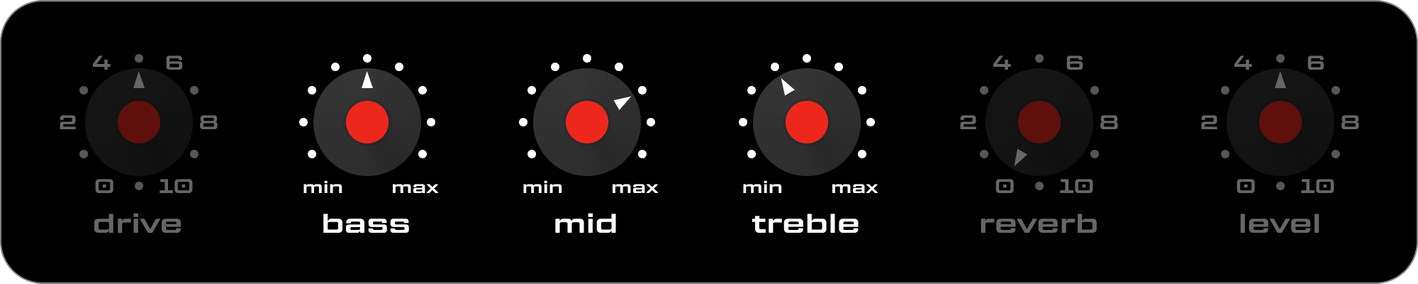
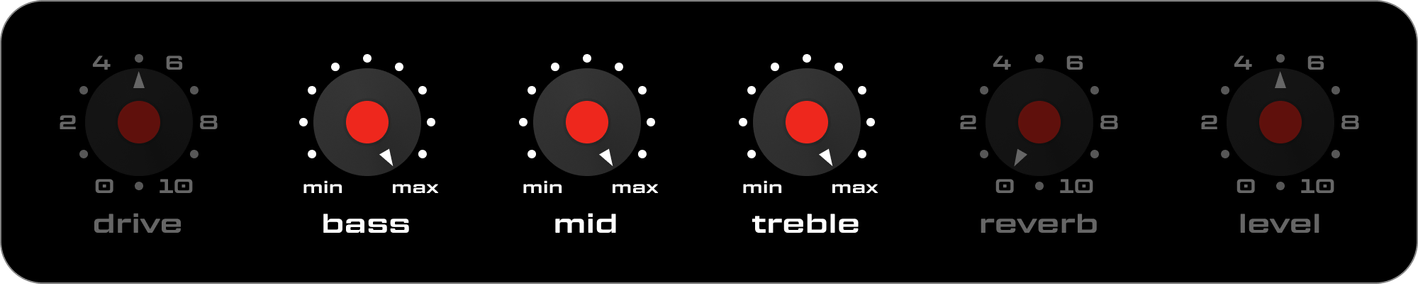
Synthy Fuzz Texture: Max out all three bands (these go to 10, not 11 ... yet) into a clipping channel. It’s square-wave chaos that eats through a mix.
CMOS Clipping: Where Dirt Gets Angular
You won’t find tubes in a Beta. What you will find is CMOS clipping — the heart of its growl. CMOS chips, usually reserved for digital logic, clip hard when overdriven. The result? A unique distortion profile that combines square-wave edge with surprising dynamics.
It’s not fuzz. It’s not overdrive. It’s something else. A crushed-glass crunch that remains articulate, even under heavy hands. And unlike tubes, it stays consistent. Your sound doesn’t collapse as the room heats up or the tubes wear out.
Where else do you hear CMOS clipping? Rarely in amps. Sometimes in boutique pedals. But the Beta circuit put it front and center, giving it the bark of a fuzz but the attack of a clean amp. A weird combo? Maybe. But it works.
Class D Power: Big Muscle, Modern Form
The 2023 Beta reissue steps into modern power with a 200W Class D amplifier. And before the tube loyalists scoff: this isn’t some sterile, boxy compromise. Class D brings tight, clean headroom and enough output to peel paint—all without coloring the preamp magic.
Class D is now the standard in nearly every modern PA speaker and studio monitor—for good reason. It delivers clarity, efficiency, and muscle. The Beta was always about sonic control in the preamp, thanks to the original design by Mr. Rod Goldhammer, with the power section acting as a clean push. Whether it’s Class AB or Class D, the character comes from the preamp—and we’ve tested it.
The result? No sonic difference. We did many side-by-side comparisons and so did Red Fang, the (by our estimate) ultimate experts in the beta amp series. That’s why the 2023 Beta uses the same Class D muscle trusted on stages and in studios across the world. Not your early, kind of weak Class D —this one’s built for chug.
It’s the perfect pairing: a vintage-inspired CMOS preamp with a future-proof power section. Lightweight, reliable, and brutally loud.
A More Usable Master Volume Curve
One of the biggest upgrades in the 2023 reissue is the redesigned master volume taper. Players of the original Betas often reported that most of the usable loudness lived between 2 and 3 on the dial, a quirk that made the control feel twitchy on stage. After that point the amp did not add much clean volume. Instead, it moved deeper into clipping. This behavior is player-documented and confirmed by our testing of multiple vintage units.
It’s worth noting that this early loudness jump was common in many tube amps of the era as well, but for different reasons. High-powered tube designs could reach room-filling volume with very little knob travel, while the Beta’s jump came from its original taper and the way its CMOS preamp interacted with the master volume.
The reissue spreads that range out so players get real volume control across the full sweep of the knob. Think of it this way: on a vintage Beta, the jump from 2 to 3 represented most of your clean-to-cranked transition. On the reissue, that same transition is stretched across a much wider range of turn. You still get the signature Beta grind, but now with far more precision.
What’s Next?
Now that you know what makes the Beta tick, Part Two takes you into what it sounds like in the wild—artist rigs, iconic albums, and sound design tips that’ll make your bandmates jealous.
Continue to the Beta Sounds. Part 2